
Dry ice blasting machinery is increasingly used for industrial equipment cleaning thanks to its ability to remove dirt and contaminants without damaging surfaces or introducing moisture. Although dry ice blasting electrical equipment cleaning is classed as a non conductive process, safe use depends on strong engineering practice, correct settings and a clear understanding of electrical hazards.
How Dry Ice Blasting Interacts With Machinery
Dry ice blasting behaves differently from abrasive or wet cleaning methods, making it suitable for many types of mechanical equipment when used correctly.
Non abrasive and non conductive action
Dry ice pellets are made from solid CO2. When propelled at speed, they strike the surface, crack the bond between contamination and the substrate and then instantly turn into CO2 gas. This impact energy combined with thermal shock removes dirt without grinding the underlying material. At suitable pressures, the process is classed as non-conductive and non-abrasive which makes it appropriate for many machines, housings and moving parts. However, pressure, nozzle type and stand off distance remain critical. Trained operators test settings carefully on each application to confirm safe results.
Cleaning without full strip down
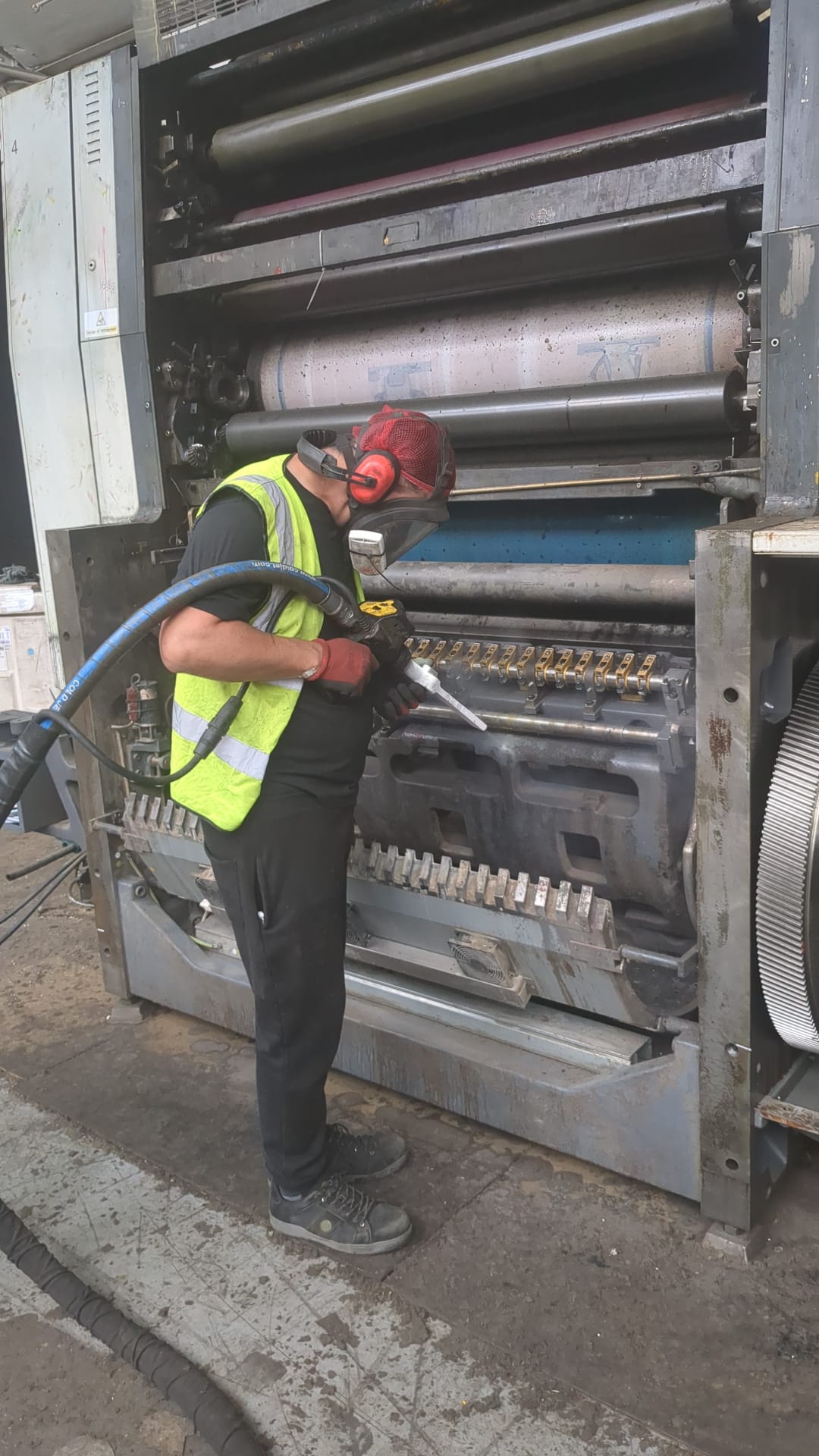
Engineers often use dry ice blasting machinery to clean motors, gearboxes, presses, conveyors and frames in place. After isolating power and removing guards or loose covers, they blast away grease, oil, dust and coatings without dismantling the equipment. This helps maintain alignment, protects bearings and reduces the duration of shutdown periods.
Risks to delicate components
Some components cannot tolerate direct impact. Thin cooling fins, soft seals, fragile labels, loose insulation and ageing paint may tear or lift if exposed to high pressure jets. Excessive air pressure may also force particles into narrow gaps or damage weakened parts. Competent operators mitigate these risks by shielding vulnerable items, adjusting to lower pressures, selecting gentle nozzles and carrying out small test patches before treating critical machinery.
Dry Ice Blasting Around Electrical Equipment
Dry ice blasting electrical equipment cleaning is widely used because the process leaves no moisture and no residue, but electrical safety requires strict adherence to standards and supervision.
Why the process is classed as non conductive
Dry ice pellets and the gas cloud they create do not conduct electricity which distinguishes the method from water blasting or wet grit cleaning. This makes it attractive for switchgear, busbars, control panels and electrical rooms where residue free and non conductive cleaning is required. However, non conductive does not mean risk free. Incorrect stand off distances, unexpected faults or disturbed debris can still create hazards, which is why electrical safety rules must remain in force.
Typical electrical applications
Common applications include cleaning live or de-energised switchgear, transformers, insulators, bus ducts, substations and control cabinets. The aim is to remove dust, grease and tracking paths that increase the risk of flashover while preserving insulation and mechanical clearances.
Clearance distances and arcing risk
Operators, hoses and blast nozzles must remain outside the minimum approach distances for the voltage present. Compressed air jets and dry ice pellets can disturb loose contaminants which may migrate between phases or into restricted gaps if used too close to energised conductors.
Safety Controls For Machinery And Electrical Cleaning
Good safety practice is essential when cleaning mechanical equipment and electrical systems using CO2 blasting safety principles.
Isolation, lockout and permits
The safest method for cleaning electrical or mechanical plant is to isolate, lock and tag equipment, confirm it is not live and then begin work. When work must take place near energised conductors, a formal risk assessment, a permit to work and supervision are required.
Ventilation, PPE and noise control
Dry ice blasting creates CO2 gas, flying debris and high noise levels. Operators wear hearing protection, eye and face protection and thermal gloves to avoid cold burns. Adequate ventilation or extraction maintains safe CO2 levels in enclosed or partially enclosed rooms.
Protecting sensitive areas
Before blasting, teams mask open bearings, sensors, ventilation slots, optics and any delicate components that should not receive direct impact. They select nozzles and pressures appropriate to each surface and maintain safe stand off distances. Operators regularly check progress to avoid over cleaning. Immediate vacuuming after blasting helps prevent loosened particles from entering joints, contacts or windings.
When Dry Ice Blasting Is Not Safe Or Not Best
There are situations where dry ice blasting electrical equipment or mechanical plant cleaning is unsuitable.
Damaged or poorly maintained equipment
Cracked insulators, exposed conductors, loose terminations and severe corrosion represent serious hazards. These conditions require repair before cleaning. In some circumstances, engineers may choose full strip downs, factory refurbishment or non impact cleaning methods to ensure integrity and safety.
Sensitive electronics and very tight assemblies
Printed circuit boards, delicate relays, miniature sensors and tightly packed control cards can be vulnerable to mechanical shock or displaced particles. Manual cleaning, precision vacuuming or specialist electronic cleaning processes may be safer for these items.
Weak structures and friable materials
Loose plaster, crumbling insulation, brittle plastics and aged cable sheathing may fail under impact even though dry ice is gentler than abrasive media. Only sound substrates should be treated to avoid worsening damage.
Good Practice For Site Owners And Engineers
Clear assessment and good management ensure that dry ice blasting electrical equipment and mechanical cleaning is effective and safe.
Assessing suitability before cleaning
A simple suitability checklist helps engineers plan work. They should confirm the material and condition of the equipment, check voltages and clearances, understand insulation types and identify sensitive parts that require shielding or avoidance. They also agree clear goals such as improving insulation resistance or removing grease and dust, followed by trials on non critical areas.
Using competent contractors
Site owners should only select contractors with proven experience in industrial equipment cleaning and electrical applications. They should provide clear method statements, risk assessments and references. Competent providers will test small areas, record results and adjust parameters for the most effective outcome.
Proving results after blasting
Teams may carry out insulation resistance or partial discharge testing before and after cleaning. Thermal imaging, vibration logging and temperature checks help verify improvements. These records support maintenance decisions and demonstrate that the cleaning process has not damaged assets.
Areas We Cover
Polar Ice Cleaning provides dry ice blasting and specialist cleaning services across the South East and surrounding regions. We regularly work on residential, commercial and industrial sites, covering towns and cities throughout Surrey, Sussex, Hampshire, Kent and Greater London. Our mobile dry ice blasting units allow us to operate efficiently on-site, whether responding to fire and smoke damage, industrial cleaning requirements or specialist restoration projects. For larger or specialist jobs, nationwide coverage can be arranged on request.
Safety for machinery and electrical plant
Dry ice blasting can be safe for machinery and many forms of electrical equipment because it is dry, non conductive and non abrasive when used correctly. True safety comes from proper assessment, controlled settings, trained operators and rigorous electrical safety practice, not from the dry ice media alone.
Contact Polar Dry Ice Cleaning today to discuss safe, professional cleaning for your machinery and electrical assets.
