Commercial kitchen cleaning requires a method that removes heavy grease, carbon deposits and food-related contamination without damaging equipment or disrupting operations. Dry ice blasting provides a controlled, non-abrasive solution for business kitchen cleaning in regulated and hygiene-critical environments.
This approach is particularly effective in commercial kitchens where production continuity, food safety and compliance standards must be maintained.
The Operational Challenge in Commercial Kitchens
High-use kitchen environments generate persistent contamination:
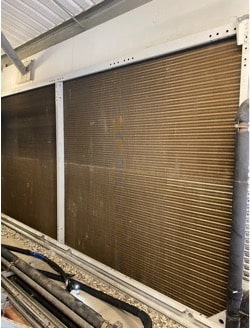
- Grease accumulation on extraction systems and ducting
- Carbon deposits on cooking equipment
- Oil buildup on machinery and structural surfaces
- Adhesive residues and hardened grime
Grease and carbon buildup are contaminants that dry ice blasting can remove effectively. In busy commercial settings, these residues can contribute to hygiene risk, reduced equipment efficiency and potential fire hazards.
Traditional deep kitchen cleaning methods often rely on water, chemicals or manual scraping. These approaches can introduce moisture, require dismantling of equipment or create secondary waste that increases clean-up time.
Where electrical systems or sensitive components are present, moisture-based cleaning can also present operational constraints.
Dry Ice Blasting for Business Kitchen Cleaning
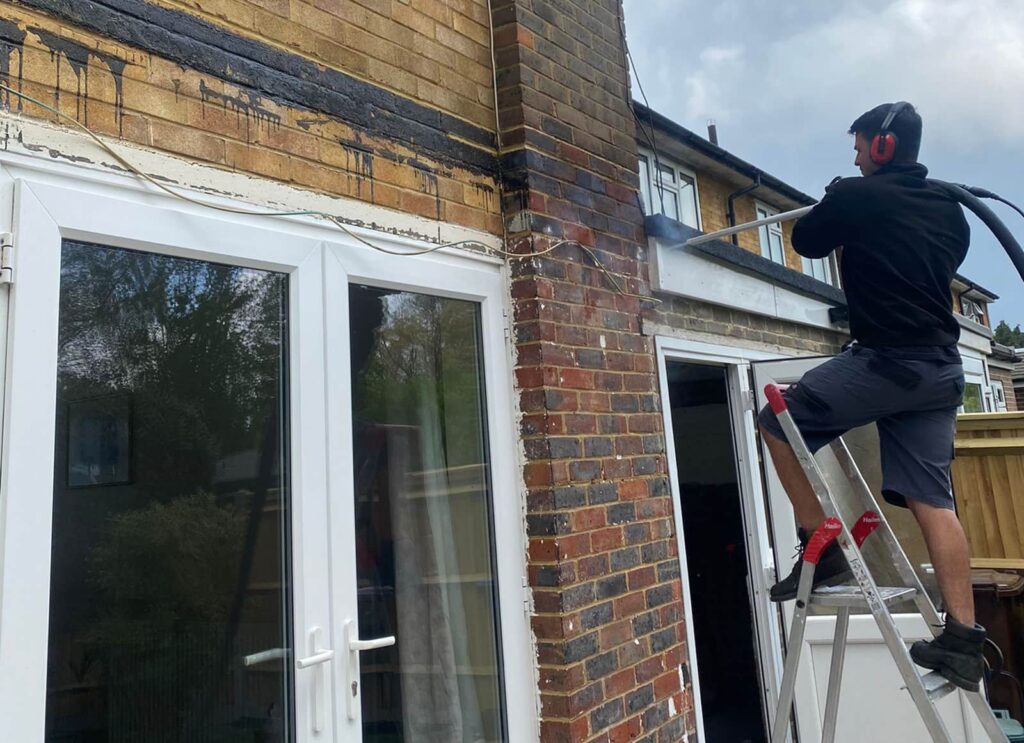
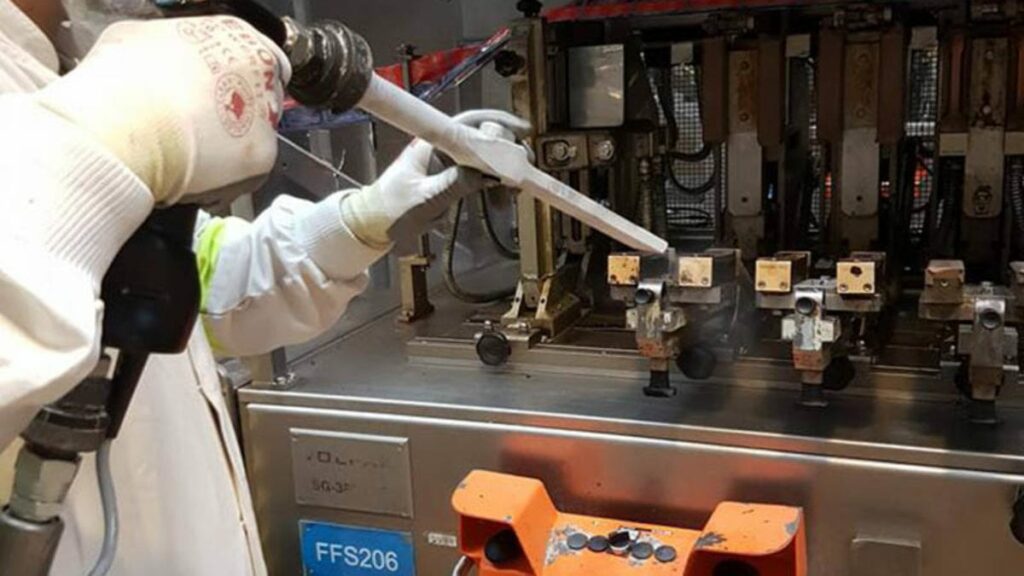
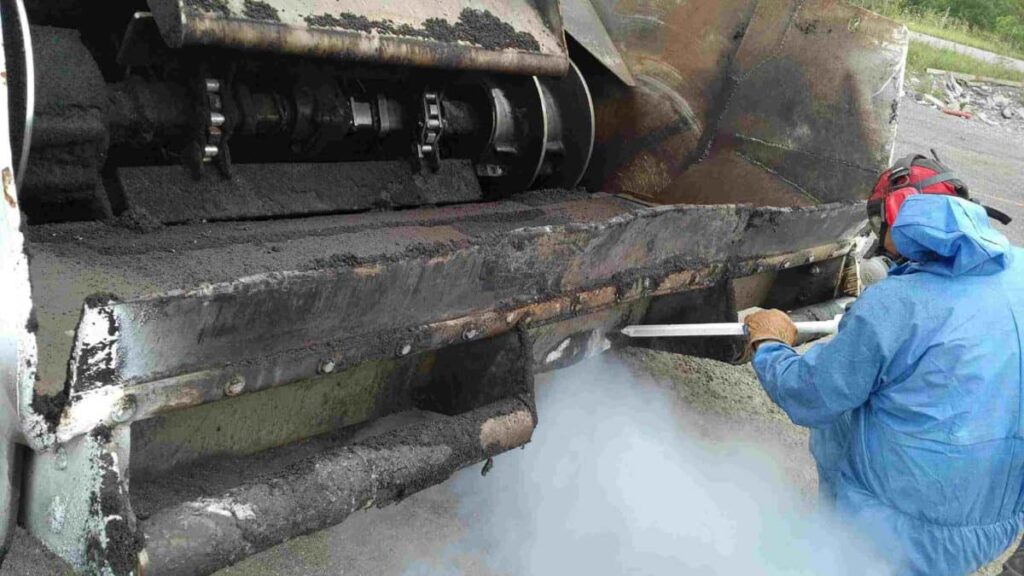
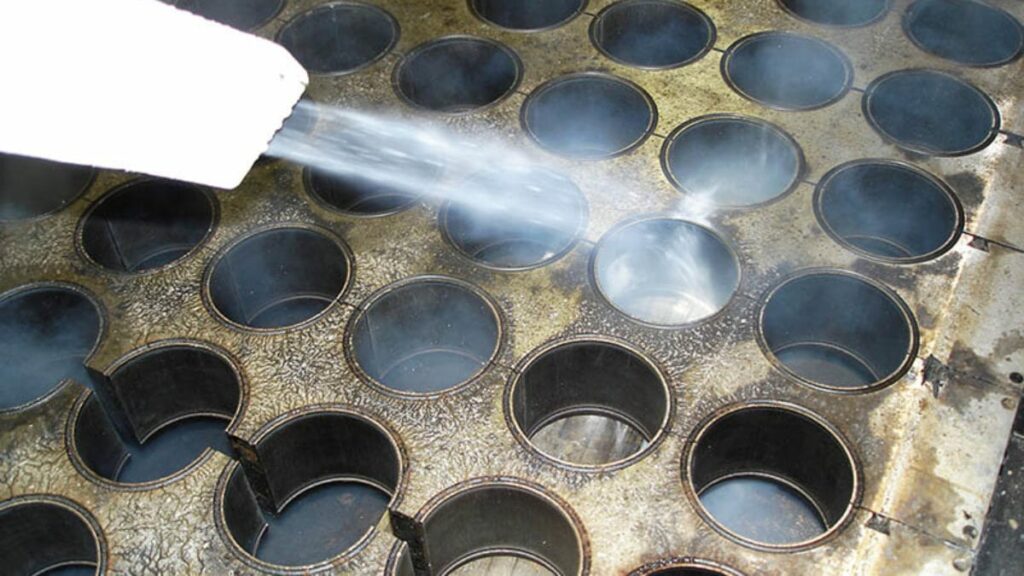
Dry ice blasting uses compressed air to propel solid CO₂ pellets at high speed towards contaminated surfaces. On impact, the pellets sublimate, converting directly from solid to gas and lifting contaminants without leaving blasting media behind.
The process works through kinetic impact, thermal shock and sublimation expansion, allowing grease and carbon to separate from the substrate.
This method is:
- Non-abrasive
- Non-conductive
- Moisture-free
- Residue-free
Because the pellets convert to gas on impact, no secondary waste is created. Only the dislodged contaminant requires collection and disposal.
For commercial kitchen cleaning, this means:
- No water saturation of equipment
- No chemical residue left on food preparation surfaces
- Reduced need for dismantling
- Minimal post-clean clean-up
Deep Kitchen Cleaning Without Surface Damage
Business kitchen environments often include stainless steel units, extraction systems, tiled walls, structural steel and electrical control panels. Abrasive methods can mark surfaces or remove protective finishes.
Dry ice blasting is considered non-abrasive when compared to traditional sandblasting or grit blasting. When properly controlled, it removes contamination without etching or damaging the underlying surface.
This is particularly relevant where:
- Equipment must remain within manufacturer tolerances
- Surface finishes must be preserved
- Hygiene inspections require visibly clean substrates
- Electrical components are present
Because the process is moisture-free and non-conductive, it can be used on many electrical components provided appropriate safety procedures are followed. This supports deep kitchen cleaning in areas where water-based methods would be unsuitable.
Hygiene, Compliance and Safety
Commercial kitchen cleaning must align with health and safety standards and, in many cases, food hygiene regulations. Dry ice blasting is a controlled process carried out by trained operators using appropriate PPE, ventilation controls, risk assessments and method statements.
The process:
- Uses reclaimed CO₂
- Produces no secondary waste
- Does not use water or chemical solvents
These characteristics support cleaning programmes in hygiene-critical environments where contamination control and environmental responsibility are important considerations, including food industry dry ice cleaning for suitable commercial kitchen projects.
Operational Benefits for Commercial Catering Environments
For facilities managers and operations teams, the practical outcomes of dry ice blasting in commercial kitchen cleaning include:
- Reduced downtime compared with traditional cleaning methods
- Minimal dismantling of equipment
- Faster return to operational readiness
- Improved equipment performance through removal of heat-trapping grease and carbon
Project duration depends on surface area, type of contaminant, accessibility and operational constraints. Each kitchen environment is assessed individually to determine the appropriate method and access strategy.
On-site mobile equipment enables cleaning to be delivered directly at client premises, reducing disruption and eliminating the need to transport large kitchen assets off site.
Suitable Environments
Dry ice blasting is widely used in industrial and regulated environments where precision and minimal disruption are essential. In the context of commercial kitchen cleaning, this makes it suitable for:
- Large-scale catering facilities
- Food production environments
- Healthcare and institutional kitchens
- Contract catering operations
The method aligns with environments where compliance, hygiene control and operational continuity are critical.