
Oak beams are a defining feature of many period and heritage properties. Over time, these structural and decorative timbers can become darkened, coated in paint, affected by mould or obscured by layers of historic treatment products. Restoring old beams requires a controlled approach that protects the integrity of the timber while removing unwanted surface contamination.
Oak beam restoration using dry ice blasting provides a specialist method designed for sensitive environments.
Why Oak Beam Restoration Requires Specialist Techniques
Oak is a durable hardwood, but it remains vulnerable to surface damage if cleaned incorrectly. Traditional methods such as aggressive sanding, grinding or chemical stripping can alter the grain, round off edges and remove historic character.
Common issues affecting beams include:
- Multiple layers of modern paint or varnish
- Smoke staining from historic fires or open hearths
- Blackened surfaces from age and environmental exposure
- Mould or biological growth in poorly ventilated areas
- Residue from past insect treatments
Mechanical abrasion can flatten the natural grain and remove surface patina. Water based cleaning methods may drive moisture into the timber, increasing the risk of swelling or distortion. Chemical products introduce additional substances into heritage interiors, which may not be appropriate in listed buildings.
Specialist oak beam cleaning techniques are therefore required to preserve the structural integrity of the timber rather than simply strip its surface. Where oak beams contribute to the structure of a property, dry ice cleaning can help reveal their condition more clearly before repair or refurbishment decisions are made. To explore this further, read our guide to structural safety considerations.
Common Problems Dry Ice Blasting Solves on Oak Beams
Dry ice beam restoration is particularly effective for removing surface contamination while preserving the original character of the timber.
Paint and Coating Removal
Painted beams are common in properties that have been modernised over time. Removing these coatings without damaging the underlying wood is challenging.
Dry ice blasting lifts paint from the surface without grinding into the grain. Because the method is non abrasive, it preserves the original profile of mouldings and hand worked details.
Dark Staining and Smoke Damage
Historic oak beams often appear blackened due to smoke exposure or decades of airborne particles. Dry ice blasting removes this surface layer, revealing the natural tone beneath while retaining the texture of the timber.
If staining is the primary concern, see our guide on removing stains from historic oak.
Mould and Biological Growth
In damp or poorly ventilated buildings, beams may develop mould or surface biological growth. Dry ice blasting removes contamination without introducing water, reducing the risk of further moisture related issues.
Charred or Fire Affected Surfaces
Where beams have experienced historic charring, controlled cleaning can remove loose carbon deposits without aggressive abrasion. The objective is not to remove structural material but to clean and stabilise the surface.
For broader structural concerns, our article on common beam problems and how to fix them provides additional context.
How the Dry Ice Blasting Process Works on Timber
Dry ice blasting uses compressed air to accelerate solid carbon dioxide pellets towards the timber surface. On impact, the pellets sublimate, converting from solid to gas. This rapid expansion lifts contamination from the surface.
Several characteristics make this suitable for oak beam restoration:
- Non abrasive cleaning that preserves the grain and structural integrity of the timber rather than grinding it away
- No water introduced into the timber
- No chemicals used in the cleaning process
- No secondary waste beyond the removed contaminant
Because the pellets sublimate on contact, there is no blasting media left behind. Only the dislodged paint, soot or surface contamination requires collection.
The process can be adjusted in pressure and pellet size to suit different timbers. It is suitable for oak, elm, chestnut and pine beams, whether structural or decorative timbers.
Dry ice blasting is not a surface grind. It is a controlled cleaning technique that removes contamination while preserving the underlying material.
Why It Is the Preferred Method for Historic and Listed Properties
Heritage properties require careful consideration. In listed buildings, alteration to original features may require listed building consent. Cleaning methods that materially alter the appearance or remove historic fabric can raise compliance concerns.
Dry ice blasting offers advantages in this context:
- No water introduced into sensitive interiors
- No chemical residues left within the structure
- No abrasive sanding that alters edges or tooling marks
This makes the method suitable for Grade I and Grade II listed buildings, where preservation of original timber detail is essential.
If you are unsure whether beams can be restored in a listed property, our guide on restoring beams in a listed building explains the regulatory considerations.
Dry ice blasting supports conservation objectives by removing inappropriate modern coatings and contamination without eroding the surface of the timber.
Specialist timber cleaning also forms part of our wider heritage cleaning services, designed for sensitive historic environments.
What to Expect on the Day of Restoration
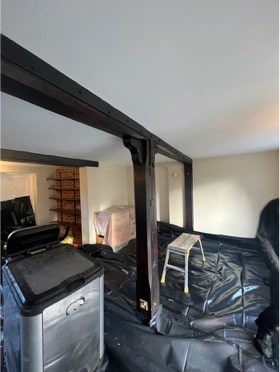
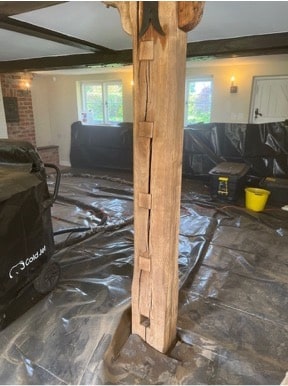
A professional oak beam restoration project begins with site assessment. Access, room protection and containment requirements are reviewed before work starts.
On the day of cleaning:
- Surrounding surfaces are protected
- Access equipment is installed where required
- Ventilation considerations are addressed
- Cleaning is carried out in controlled sections
The duration depends on the number of beams, ceiling height and extent of contamination. Because the process produces no water and no chemical residue, drying time is not required.
The finished result typically reveals a lighter, cleaner timber surface while retaining natural grain and historic character. The aim is not to create a newly machined appearance but to restore clarity and remove unwanted layers.
Maintenance Tips After Restoration
Once beams have been restored, maintaining appropriate environmental conditions helps prevent recurrence of staining or mould growth.
Practical measures include:
- Managing indoor humidity levels
- Ensuring adequate ventilation
- Avoiding application of unsuitable modern coatings
Regular inspection allows early identification of moisture issues. In properties with historic timbers, periodic professional assessment may be appropriate.
Restoring old beams is not solely about cleaning. It is about preserving structural and aesthetic value over time.
Arrange a Professional Beam Restoration Assessment
Visit our Beam Restoration page for methods and case studies, see Dry Ice Blasting for Beams for a conservation-focused approach, or explore historic oak beam restoration in Hampshire, West Sussex or East Sussex for local information, alongside suitable projects throughout the South East and further afield where project scope allows.
If you are considering oak beam restoration and want to understand whether dry ice blasting is suitable for your property, contact Polar Dry Ice Cleaning to arrange a professional assessment.
